Tanzania Currency Guide: Money, Exchange Rates & Payment Tips
Outlines
What Currency Is Used in Tanzania? A Complete Travel Guide
Planning a trip to Tanzania or Zanzibar? Understanding the local currency and available payment methods is an important part of preparing for your journey. Whether you are visiting for a wildlife safari, climbing Mount Kilimanjaro, exploring cultural attractions, or enjoying a beach holiday in Zanzibar, knowing how money works in Tanzania will help you travel with confidence.
In this guide by Nano Africa Safaris, we explain everything international travelers need to know about money in Tanzania, including the official currency, cash payments, bank cards, currency exchange, exchange rates, local prices, tipping practices, and Tanzanian banknotes. You will also discover whether US dollars are accepted, where to exchange money, and how much cash you should carry during your stay.
What Is the Currency in Tanzania and Zanzibar?
The official currency of Tanzania is the Tanzanian Shilling, which is also used in Zanzibar because the island is part of the United Republic of Tanzania. Therefore, whether you are exploring mainland Tanzania or relaxing on the beaches of Zanzibar, the national currency remains the same.
The international currency code for the Tanzanian Shilling is TZS. You will commonly see this abbreviation when checking exchange rates, making payments, or exchanging foreign currencies at banks and licensed exchange bureaus.
One Tanzanian Shilling is theoretically divided into 100 cents. However, cents are not commonly used in everyday transactions. Although smaller coins exist, most everyday purchases are made using banknotes, particularly denominations of 1,000 shillings and above.
It is important to distinguish the Tanzanian Shilling from other currencies that also use the name shilling, such as the Kenyan Shilling and Ugandan Shilling. When traveling in Tanzania, always look for the TZS currency code to ensure you are dealing with the correct currency.
What Can You Pay With in Tanzania?
Tanzania offers several payment options for visitors, including cash, bank cards, and certain electronic payment methods. However, the availability of these options depends on where you are traveling and the type of business you are dealing with.
Understanding the difference between cash and cashless payments will help you avoid unnecessary difficulties during your trip.
Paying With Cash
Cash remains an important payment method throughout Tanzania. Since March 2025, Tanzanian Shillings have been required for most domestic cash transactions, meaning foreign visitors should exchange their foreign currency into local money before making everyday purchases.
For ordinary expenses such as meals at local restaurants, shopping, taxis, and other local services, travelers should use Tanzanian Shillings.
An exception applies to the tourism industry, where tour operators are permitted to issue invoices and accept payments in foreign currencies from international visitors. This makes it possible to pay for organized safari packages, mountain climbing trips, and other tourism services in currencies such as US dollars.
When exchanging US dollars, it is advisable to carry newer banknotes. Many banks and exchange bureaus may prefer or require US dollar bills issued after 2009, while older notes may be declined.
For convenience, keep smaller Tanzanian Shilling denominations available for everyday purchases, local transportation, and other minor expenses.
Paying by Card
Bank cards are accepted in many establishments that regularly serve international tourists, including hotels, luxury lodges, restaurants, tour operators, and some national parks.
Visa and Mastercard are among the most commonly accepted international card networks in Tanzania. However, card acceptance is not universal, particularly in smaller towns, local markets, and remote areas.
Travelers should also be aware that card payments may involve additional transaction fees. Some establishments apply payment surcharges, while international banks may charge additional currency conversion or foreign transaction fees.
Before traveling, inform your bank about your travel dates and destination to reduce the possibility of your card being blocked due to unusual international transactions.
ATMs are available in major cities and many popular tourist destinations. They allow visitors to withdraw Tanzanian Shillings using compatible international bank cards. However, ATMs generally dispense local currency rather than US dollars.
What's the Best Way to Pay in Tanzania?
The most convenient approach is to combine cash and bank cards rather than relying entirely on one payment method.
Carry a bank card for hotel payments, larger purchases, and emergencies, while keeping a reasonable amount of Tanzanian Shillings for everyday expenses.
It is also advisable to inform your bank before departure and check the international transaction fees associated with your card.
If you plan to exchange foreign currency, avoid converting more money than you expect to spend. This is because exchanging unused Tanzanian Shillings back into foreign currency may be difficult or involve unfavorable exchange rates.
For safari travelers, it is particularly useful to have some local cash available for personal expenses, small purchases, and tips during the journey.
What Else Do You Need to Know About Money in Tanzania?
Understanding how to exchange money, check currency rates, manage daily expenses, and handle tips can make your stay in Tanzania much easier.
Here are some additional financial tips to consider before and during your visit.
Where to Exchange Currency in Tanzania?
Foreign currencies can be exchanged at authorized banks and licensed foreign exchange bureaus throughout Tanzania.
Banks are generally a reliable option, and exchange bureaus are also available in major cities, airports, and popular tourist areas. However, exchange rates may vary between providers, so it is always worth comparing available rates before completing a transaction.
Avoid exchanging large amounts of money with unauthorized individuals on the street, as this can expose you to scams or other security risks.
If you need local currency during your trip, it is best to visit a reputable bank or licensed exchange bureau.
What Is the Exchange Rate?
The exchange rate between the Tanzanian Shilling and other international currencies changes over time depending on market conditions.
Visitors traveling with US dollars, euros, or British pounds can check the latest exchange rates before exchanging their money.
Useful online platforms for checking exchange rates include XE and OANDA. These services provide currency conversion information and allow travelers to estimate how much their foreign currency is worth in Tanzanian Shillings.
Keep in mind that the rate displayed online may differ from the rate offered by banks and exchange bureaus because of service charges and other transaction costs.
What Are the Prices Like in Tanzania?
Tanzania offers a wide range of experiences for different travel budgets. Daily expenses depend on your destination, accommodation preferences, dining choices, and travel style.
For a general idea, here are some approximate prices for common items and services:
-
Water, soft drinks, and juices: 1,000–10,000 TZS.
-
A bottle of wine: 15,000–50,000 TZS.
-
Snacks and chocolate: 5,000–20,000 TZS.
-
A meal in a tourist café: 25,000–60,000 TZS.
-
A meal in a restaurant: 40,000–100,000 TZS.
-
A pizza in a restaurant: 15,000–25,000 TZS.
-
A cup of coffee: Around 5,000 TZS.
-
A quick meal in a local café: Around 10,000 TZS.
These prices are approximate and may vary depending on the location, establishment, and type of service.
Tourist destinations such as Serengeti National Park, Ngorongoro, Arusha, and Zanzibar may have different price levels compared to smaller towns and local communities.
How to Leave Tips in Tanzania?
Tipping is a common practice in Tanzania, particularly within the tourism and hospitality industries. Although it is generally voluntary, leaving a tip is a popular way to appreciate good service.
In restaurants and cafés, visitors may leave up to 10% of the bill when satisfied with the service.
At hotels and lodges, guests can give small tips to staff members who assist with luggage or provide additional services. For example, tipping approximately 1–3 US dollars for luggage assistance is a common practice in some tourist establishments.
For safari guides, drivers, and mountain climbing crews, tipping practices may vary depending on the length of the trip, the level of service, and the company's recommendations.
If you are joining an organized safari or Kilimanjaro expedition with Nano Africa Safaris, you can ask our team for guidance on appropriate tipping arrangements before your journey.
When visiting busy tourist areas, you may also encounter individuals offering to guide you, carry your luggage, or organize informal tours. Always agree on any charges beforehand and only accept assistance when you genuinely need it.
Are There Any Currency Restrictions?
Travelers should familiarize themselves with Tanzania's currency regulations before arriving or departing.
According to the information provided in the source article, restrictions apply to the import and export of Tanzanian Shillings by non-residents, with exceptions for citizens of neighboring Kenya and Uganda. Visitors should therefore plan to spend or exchange any remaining local currency before leaving the country.
Travelers carrying more than 10,000 US dollars or its equivalent in foreign currency should also check the applicable customs declaration requirements before traveling.
ATMs may have individual withdrawal limits, which can vary depending on the bank and machine. It is advisable to check the withdrawal limit displayed before making a transaction.
Banknotes and Coins of Tanzania
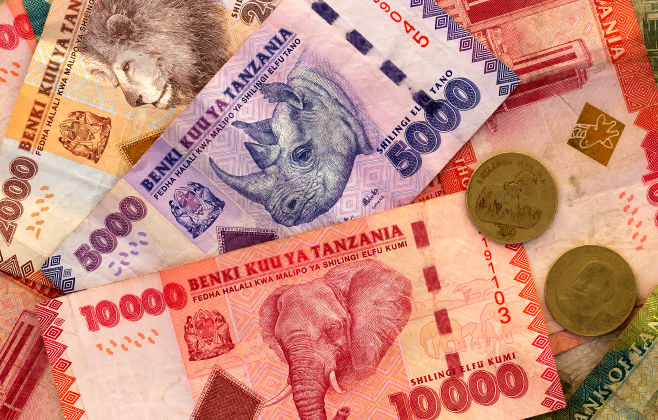
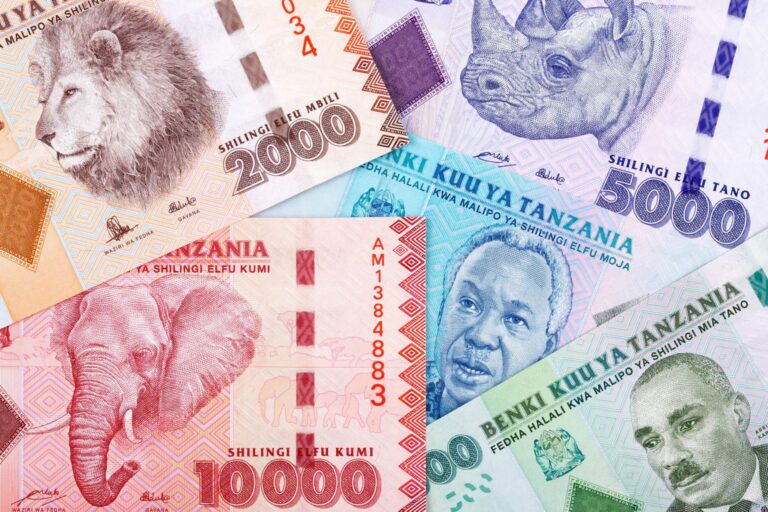
Tanzanian banknotes and coins feature distinctive designs representing the country's wildlife, historical figures, architecture, and natural heritage.
Familiarizing yourself with the different denominations will make it easier to recognize local money when shopping, paying for services, or exchanging currency.
The banknotes described below belong to the 2011 series, which features several iconic symbols of Tanzania.
10,000 Tanzanian Shilling Banknote
Red banknote
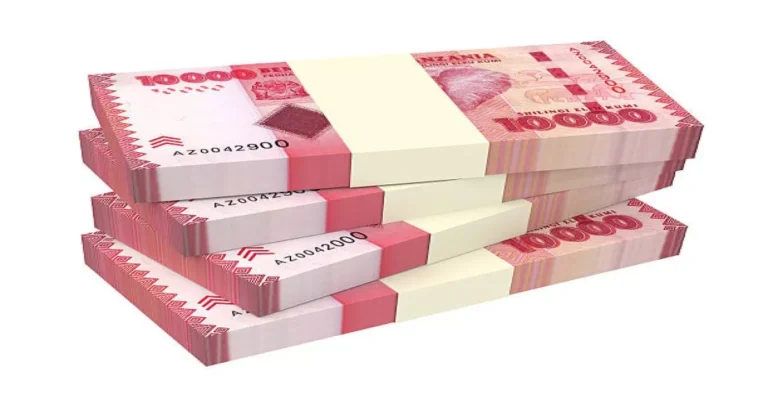
The 10,000 Tanzanian Shilling banknote is the highest denomination among the banknotes described here. Its design features an elephant, representing Tanzania's remarkable wildlife heritage, alongside an image of the Bank of Tanzania headquarters in Dar es Salaam.
The Swahili word for ten thousand is elfu kumi, which is reflected in the denomination printed on the banknote.
5,000 Tanzanian Shilling Banknote
Purple banknote
The 5,000 Tanzanian Shilling banknote features the head of a rhinoceros on its front side, highlighting one of Africa's most recognizable wildlife species.
Its reverse side depicts an industrial gold-processing facility, representing another important sector of Tanzania's economy.
In Swahili, the words elfu tano mean five thousand.
2,000 Tanzanian Shilling Banknote
Orange banknote
The 2,000 Tanzanian Shilling banknote features the head of a lion on the front, symbolizing Tanzania's rich wildlife and safari heritage.
On the reverse side, the banknote displays a historic Arab fort in Zanzibar, reflecting the island's cultural and architectural history.
The Swahili word mbili means two.
1,000 Tanzanian Shilling Banknote
Blue banknote
The 1,000 Tanzanian Shilling banknote features Julius Nyerere, Tanzania's first president, who played a significant role in the country's independence and early development.
The reverse side showcases the Tanzanian presidential residence.
The Swahili word moja means one.
500 Tanzanian Shilling Banknote
Greenish banknote
The 500 Tanzanian Shilling banknote is another denomination used in Tanzania, although it is less commonly encountered in everyday transactions.
Its design features Abeid Amani Karume, the first president of Zanzibar, alongside university buildings and students in Dar es Salaam.
Tanzanian Coins
Tanzania also has several circulating coin denominations, including 50, 100, 200, and 500 Shillings.
These coins are commonly used for small transactions and may be given as change when shopping or purchasing everyday items.
Some coins feature distinctive images of Tanzania's wildlife. For example:
-
The 50 Shilling coin features the profile of Tanzania's second president and rhinoceros silhouettes.
-
The 100 Shilling coin depicts a group of antelopes.
-
The 200 Shilling coin features a family of lions.
-
The 500 Shilling coin showcases an African buffalo.
These designs reflect the country's rich natural heritage and make Tanzanian currency interesting for visitors to discover.
Older banknotes from previous series may also occasionally be encountered. However, travelers should check that the notes they receive are genuine and remain accepted as legal tender.
Final Thoughts: Understanding Money in Tanzania
Understanding the Tanzanian Shilling, payment methods, exchange rates, and local financial practices is an important part of planning a successful trip to Tanzania.
Although international visitors can use bank cards in many tourist establishments, carrying some local currency remains essential for everyday purchases and services. Choosing authorized exchange bureaus, keeping your valuables secure, and planning your travel budget carefully will help you avoid unnecessary financial difficulties.
Whether you are preparing for a wildlife safari in the Serengeti, exploring the Ngorongoro Crater, climbing Mount Kilimanjaro, or enjoying a relaxing holiday in Zanzibar, being familiar with the local currency will make your experience more convenient.
At Nano Africa Safaris, we want every traveler to enjoy a smooth and memorable experience in Tanzania. Understanding the country's currency and payment options before arrival is one simple way to make your adventure more comfortable and stress-free.
Note: Currency rules, exchange rates, bank charges, prices, and cash restrictions can change. Confirm the latest requirements with official Tanzanian authorities, your bank, or a licensed financial institution before traveling.
Explore Blogs